
Jamie Dunn: A Legacy of Laughter and Community Devotion
A deep-dive tribute into the life of Jamie Dunn, the voice of Agro and a legend of Australian radio...

 12°C
12°C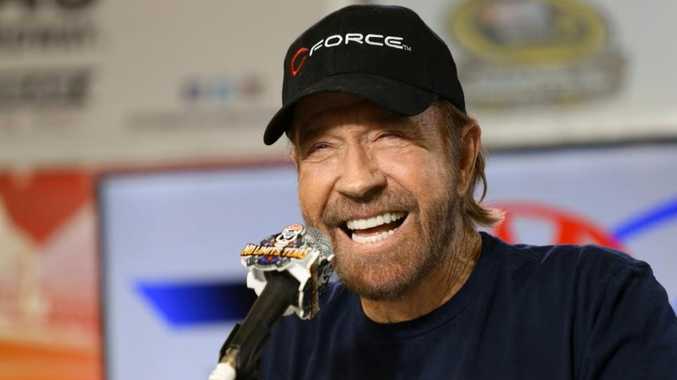
Chuck Norris, the martial artist who became one of Hollywood's most recognisable action stars and a global cultural icon, has died at the age of 86. His passing marks the end of a career that not only defined an era of action cinema but also reshaped how strength, discipline and resilience were portrayed on screen.
His family confirmed that Norris died peacefully, surrounded by loved ones, after falling ill while staying at his longtime retreat in Kauai, Hawaii. While the exact cause of death has not been publicly disclosed, tributes from across the world quickly followed, reflecting the extraordinary reach of his influence.
To millions, Norris was more than just an actor. He was the embodiment of toughness, discipline and quiet authority. To his family, he was a devoted husband, father and grandfather, described as the heart of their lives and a man who lived with unwavering purpose and faith.
Born Carlos Ray Norris on March 10, 1940, in Ryan, Oklahoma, his early life was far from the powerful persona he later became known for. Raised primarily by his mother after his parents' separation, Norris described himself as shy and unathletic during his childhood. That narrative would later become one of the most compelling transformations in modern celebrity history.
His journey into martial arts began while serving in the United States Air Force in South Korea. It was there that he discovered Tang Soo Do, a Korean martial art that would shape the rest of his life. What started as a discipline quickly evolved into an obsession. By the time he returned to the United States, Norris had already begun laying the foundation for what would become a legendary career.
Throughout the late 1960s and early 1970s, Norris dominated the competitive martial arts scene, winning multiple world championships and earning black belts across several disciplines. His reputation as a fighter was not built on hype, but on results. He was widely respected by peers and competitors alike, including some of the most formidable martial artists of his time.
One of the most pivotal moments in his career came when he met Bruce Lee at the 1967 All-American Karate Championships. Their mutual respect and friendship would lead to one of the most iconic fight scenes in cinema history in the 1972 film "Way of the Dragon." The battle between Norris and Lee inside the Roman Colosseum remains one of the most analysed and celebrated martial arts sequences ever filmed.
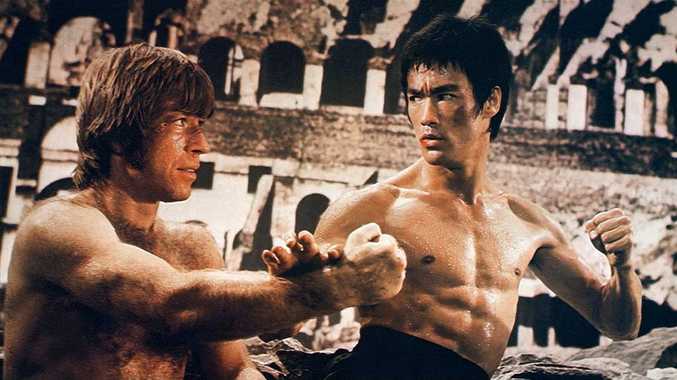
That moment wasn't just cinematic it was strategic. Norris understood early that visibility mattered as much as skill. While many fighters stayed within the competitive circuit, he transitioned into film, leveraging his authenticity to stand out in a rapidly growing action genre.
From there, his Hollywood career accelerated. Films like "Good Guys Wear Black," "A Force of One," "Missing in Action," and "The Delta Force" positioned him as a leading man in action cinema. Unlike many actors who relied on stunt doubles or choreography alone, Norris brought real-world combat credibility to his roles, which resonated with audiences.
However, his most defining role came with the television series "Walker, Texas Ranger." Running for eight seasons, the show turned Norris into a household name across multiple generations. His portrayal of Cordell Walker a lawman who combined martial arts with moral clarity cemented his image as both a fighter and a figure of justice.

This is where his brand truly evolved. He wasn't just an action star anymore, he became a symbol. Discipline, integrity and strength were no longer just traits of his characters; they became associated with Norris himself.
And then came something no one could have predicted: the internet turned him into a myth.
The "Chuck Norris Facts" phenomenon transformed his already larger-than-life persona into something almost folklore-like. Jokes about his invincibility, strength and supernatural abilities spread globally, introducing him to a completely new audience. Instead of resisting it, Norris embraced the humour, further strengthening his connection with fans.
This adaptability is what most people overlook when analysing his career. He wasn't just tough, he was strategically aware. Many actors fade when trends shift. Norris evolved with them.
Beyond film and television, Norris built a significant business and financial portfolio. At the time of his death, his net worth was estimated at around $US70 million. His investments included multiple properties, including a ranch in Texas and a long-time family retreat in Hawaii. He also co-founded CForce, a premium bottled water company headquartered at his Lone Wolf Ranch.
His Dallas home, which served as a base during the filming of Walker, Texas Ranger, reflected both his lifestyle and brand, functional, expansive and built around performance. The property even included a dedicated studio space used for production.
But focusing only on his financial success misses the bigger picture. Norris understood something most people don't: leverage your identity. He turned discipline into brand equity, and brand equity into long-term wealth.
On a personal level, Norris's life was complex. He was married twice, first to his high school sweetheart Dianne Holechek, with whom he had two sons. He later married Gena O'Kelley, and the couple had twins. He also had a daughter from an earlier relationship. Despite the complexities, his family remained central to his life.

He was also open about his faith and political views, often aligning with conservative ideologies. While this attracted both support and criticism, Norris never attempted to dilute his stance to maintain universal approval. Whether people agreed with him or not, he remained consistent, a rare trait in public life.
That consistency is a key part of his legacy.
Because here's the reality most people avoid: Norris didn't succeed because he was the most talented actor in Hollywood. He succeeded because he was authentic, disciplined and relentless. He built credibility in one field, transitioned it into another, and then reinforced it through decades of consistency.
That's what made him different.
His death marks more than the loss of an actor. It marks the end of a generation of figures who built their identity from the ground up without shortcuts, without digital amplification, and without manufactured narratives.
Chuck Norris didn't just play strong characters. He became one.
And whether through martial arts, film, television or internet folklore, his impact is not something that fades with time. It compounds.
He is survived by his wife, children and grandchildren, along with millions of fans who grew up watching, admiring and, in many cases, measuring themselves against the standard he set.
That standard wasn't perfection.
It was discipline.
And that's far harder to replicate.